
The Art of Detail in Urban Sketching
When you reach the final stages of an urban sketch, a quiet tension often arises.
Your sketch has structure. The composition sits well, the tones feel balanced, and your colours are singing.
But now, pen hovering in the air, you're standing at the crossroads of detail.
Do you add more? Will it bring the sketch to life or push it too far?
For many beginner sketchers, this is the moment that creates anxiety. That inner critic speaks up: What if I ruin it? What if I do too much? Or not enough?
The truth is, there’s no one-size-fits-all answer. But there is a toolkit of techniques you can learn, experiment with, and make your own.
Why Detail Matters (And Why It’s So Tricky)
Detail is where a sketch can either come alive or start to feel heavy-handed. One too many marks can muddy your message; too few, and the piece might feel incomplete. It's not about following rules - it’s about making choices.
Ian Fennelly often likens this stage to seasoning a meal. You’ve done the cooking (composition, tone, colour). Now it’s time for just enough spice to bring out the flavour. Not so much that it overwhelms.
7 Urban Sketching Detail Techniques to Try
Whether you're sketching a quiet village street or a lively urban scene, here are techniques that can help you explore detail with confidence:
1. Hatching for Texture and Tone
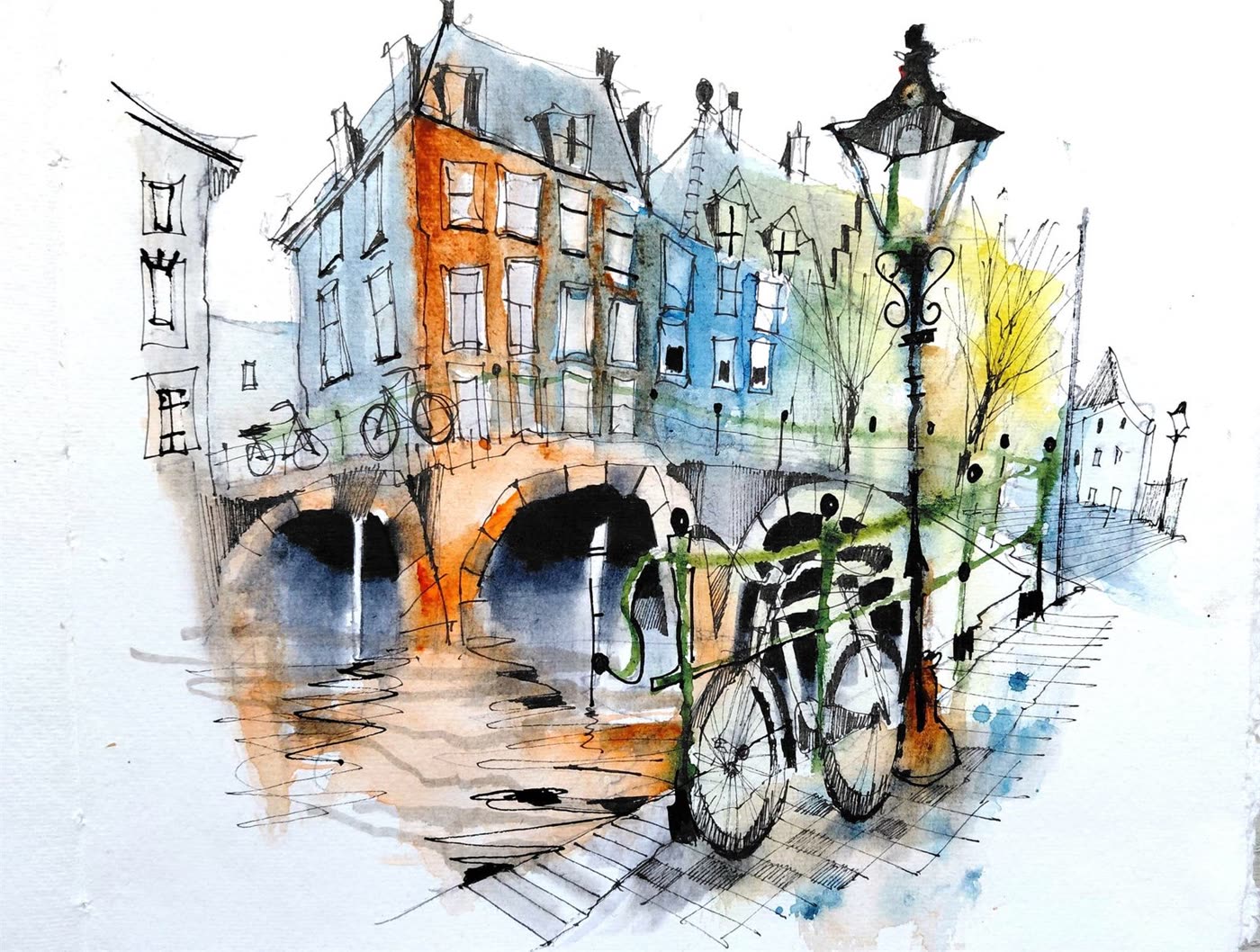
Simple, parallel lines give you control over shade and surface. Try diagonal hatching on rooftops or cross-hatching for deeper shadows. A 0.1 pen keeps it light; a 0.3 adds drama. Practice on scrap paper first to get a feel for spacing and pressure.
2. Using Negative Space for Emphasis
Instead of drawing the object, draw around it. This trick makes shapes pop—especially useful for intricate areas like railings or tree branches. Think of it like cutting with scissors: you're shaping the subject by outlining the space around it.
3. Taking a Line for a Walk
Let your pen wander. This technique helps loosen your hand and adds energy to natural textures like foliage or cobblestones. It’s a powerful antidote to perfectionism.
4. Pops of Black for Depth
A bold shadow under a bench or a dark doorway instantly anchors your sketch. These touches make parts of your drawing recede, creating depth without needing to draw every detail.
5. Suggesting Texture with Small Marks
Try a swirl for a cobblestone, a zigzag for woodgrain, or a few dots for gravel. You're not trying to be exact - you’re giving just enough to let the viewer’s imagination fill in the blanks.
6. Varying Line Weight for Perspective
Thicker lines draw the eye forward; thinner lines recede into the background. You can even let lines break or wobble—they’ll feel more human, more alive.
7. Mixing Techniques
Some of the most compelling sketches layer techniques together: hatching under a window ledge, negative space in the iron railings, a pop of black under tree foliage. The more you play, the more instinctive these choices will feel.
Detail Is a Personal Journey
There’s no right amount of detail. Some sketches beg for texture; others are more powerful when they breathe.
Try this: on your next sketch, choose just two detail techniques to focus on. See how that shapes the feel of your page.
Over time, you'll start to develop your own "detail signature" - a unique style that brings out your voice on the page.
And that’s when your sketching becomes more than just drawing. That’s when it becomes a conversation with yourself, with your surroundings, and with those who view your work.
Ready to learn more?
If you’d like to dive deeper into these techniques (with step-by-step guidance and a supportive community), our Urban Sketch PLUS Membership gives you access to weekly training modules and more. No pressure. Just the invitation to keep growing - at your own pace, in your own way.Did you enjoy this article?
Thanks for your feedback!