A whole sketch of a Porto street, start to finish, free: the quickest way to find out whether Ian's way of teaching suits you.
What you'll be able to do
- Plan any composition using your pens - before you make a single mark.
- Start your sketch with confidence..
- Paint with four colours and mix neutrals on the page.
- How to add tone over paint using just five brush pens.
- Add effects and bring your sketch to life using tone, texture and direction.
About this course
Overview
NO CREDIT CARD REQUIRED
What if the only thing standing between you and a sketch you're proud of… was the first line?
Most beginners freeze at the blank page.
Not because they lack interest, but because deep down they think: “What if I can’t do this?”
This free sketching course, from leading urban sketcher and teacher Ian Fennelly, was designed for exactly that moment.
Best of all...
- You don’t need experience.
- You don’t need expensive supplies.
- And you certainly don’t need to be “good” at drawing.
You just need one quiet moment, a pen and a little guidance from someone who makes it feel possible.
The Lessons
Through seven short lessons, this free urban sketching course guides you step-by-step, while teaching you tricks, tips, and techniques you can apply today to start producing your own impressive urban sketches.
Why Free Urban Sketching Course?
Pencil, then pen
You sketch in soft pencil, go over it with a 0.3 fineliner, then rub the pencil out before painting so graphite never muddies your washes.
Four colours only
Paint with just four colours and mix your neutrals on the page, using complementary pairs such as ultramarine and burnt sienna.
Tone from brush pens
Five Tombow brush pens, a black plus warm and cool greys, add tone over the paint, and you practise parallel hatching on scrap paper first.
Ready when you are
Start Free Urban Sketching Course today
Short lessons, free and yours to keep. No card needed.
Your learning path
Seven short lessons, one sketch of a Porto street, in the same order Ian uses on every course.
Before you start
Find your scene
Ian looks at Largo de Pena Ventosa before he draws a line: he traces the big shapes with a finger and lays pens on the page to find the one strong vertical that anchors the whole sketch.
You'll practise
- Trace the scene with a finger first
- Lay pens on the page to plan where things go
- Find one anchor line to start from
Step 1 · Warm-up
One continuous line
A warm-up before the real thing: “taking a line for a walk”, the idea Ian learned at art college from Paul Klee. Keep the pen moving and let the line have a life of its own. It is what gives his sketches their energy.
You'll practise
- Keep the pen on the paper and moving
- Let the line wander a little
- Energy matters more than accuracy
Step 2
Big shapes first
A soft 4B pencil and loose marks. Ian blocks in the main shapes of the buildings, adjusts widths as he goes and rubs out freely, because nothing at this stage is precious.
You'll practise
- Use a soft 4B pencil and keep it light
- Get the big shapes in before any detail
- Adjust, rub out, adjust again
Step 3
The initial sketch
Over the pencil with a 0.3 fineliner. The pencil is only a guide: Ian looks again and changes a roof line or makes a building taller where the scene asks for it. Then the pencil is rubbed out so it can't muddy the washes.
You'll practise
- Use the pencil lines as a guide, not something to trace
- Change a line when a closer look says so
- Rub out the pencil before you paint
Step 4
First washes of colour
Four colours and plenty of water. Ian shows how much water goes into each wash, and how ultramarine and burnt sienna mix on the page into the soft neutrals of old stone.
You'll practise
- Work with just four colours
- Let the water do the work
- Mix neutrals on the page, not in the palette
Step 5
Building the colour
While the first washes are still damp, more colour goes in: a watery manganese blue opens up the space at the bottom of the street and blends into the ultramarine on its own.
You'll practise
- Add colour while the paper is still wet
- Let neighbouring colours run together
- Leave white paper for the light
Step 6
Detail
Everything so far builds to this stage, where the character of the place comes in: brush pens in black and warm and cool greys for tone, then hatching for texture and direction.
You'll practise
- Add tone with brush pens over the paint
- Use hatching for texture and direction
- Choose where the detail goes, and leave the rest
When you finish
A sketch of Porto to be proud of
A whole street, finished, in your own hand. Sign it, frame it and hang it on the wall, or give it to someone who loves Porto as much as you will. Ian then looks back over every stage and explains why he does each one, the same order he uses on every course, so what you learn here carries straight into the next.
What students say
He's funny, informative and entertaining while guiding you step by step along the way! Of course, I love his style, but best of all he's helped me find my own artistic voice!
Joanie Crombie
I'm 61 years young and took up watercolours after retiring from nursing. I've taken a few online classes and this one is my absolute favorite!
Mary Baldree
This course has broadened my knowledge of art principles, foundations and methods. I have gained confidence and a sense of fearlessness to tackle any scene. My completed works look more expressive and professional.
Marianne Ochalek
I have always wanted to draw and paint and it’s taken me until I’m 50 to find someone whom I understand. I love how the processes he shares are explained and it’s very easy to follow. People that see my interpretation can’t believe I produced it!
Sharon Nicholson
Ian is a great tutor. Pleasant , clear and shares many details taking us gradually through the process - repeating important facts so they become second nature. I am enjoying the course and can see significant improvement in my sketches.
Renuka Dissanaike
It was so much fun to do and I absolutely love Ian's freestyle technique of teaching!
Suzan Gottshall
I have purchased all they have and improved as an artist (yes, I now feel I can call myself an artist :-) beyond what I could have ever hoped.
Scott Peterson
Ian brings joy and exploration energy to learning. While he has specific techniques he imparts, his enthusiasm for playing around comes through and is infectious. Several people noticed the shift in what I was making once I started with him. It’s now been 4 years, and I’ve loved all of it.
Gretchen Anderson
I have purchased nearly all of Ian's courses. He has a wonderful personality and sense of humor so I have a great time watching while I learn from him.
Dee
The course for beginners was a great benefit for me. I really learned a lot, how to phase my work, how to make perspective, how to make and use presketch, how to mix colours and use water, toning... My pictures got depth and look better. Thank you very much.
Andrea Kolarikova
Great fun to do with Ian’s guidance (thank you) and learnt so much.
Alison Menzies-Sacher
A wonderful tutorial from a wonderful city I love this1.
Marian Pooran
I am home bound and can't go out to sketch, but thanks to these wonderful tutorials I can sketch along and have the joy of painting.
Melissa McCutcheon
I learned so much from Ian’s lessons. I especially appreciated the background info about the scene to paint, the step-by-step process, and the clear explanation of perspective.
Violet Nesdoly
I chose Porto to begin with and I spent a wonderful time sketching this scene.
Esther Middel
My very first look at Urban Sketching and I was in love with Ian's style.
Lindy Armiger
This is my first attempt at a watercolour, and following Ian's wonderful and fun style.
Bob Vayda
I loved working on this course and this sketch and learning the different techniques!
Marianne Germain
This is my first ever urban sketch, loads of fun to do and learnt so much through the free course, thank you Ian and team!
Carmen Jacobsen
Loved the way Ian guides you through the process so I’ve signed up for more!
Melinda Lewis
First attempt at urban sketching - and I loved it.hope it shows in my drawing.
Andrew Hunter
Really enjoyed it, though there are some areas I'd change - not sure about the right side buildings and the image needs more space.
Lynn Love
I enjoyed the lesson very much though and will be moving forward to the next one very quickly.
Elise Mills
Loved my first introduction to Urban Sketching with this -Largo de Pena Ventura in Porto.
Julie Ryan
This is my very first attempt at urban sketching and fell head over heels in love!
Simone van den Berg
This was from the free course enjoyed this one.
Karen Johns
I enjoyed it very much.
Carmen Budan
First course with Ian - wow, Learnt so much.
Deborah Ibach
Loved working on this scene and aiming for a relaxed style.
Glynis Rockett
Overall, I really enjoyed the course.
Heike Henjes
Complete newbie to sketching and really enjoyed this free lesson.
Fiona Rescorle
My First attempt with Ian, thoroughly enjoyed this lesson.
Val Johnson
My first ever urban sketch and I love it.
Laura Lam
I followed along Ian's free class and just loved his work.
Pearl Yu
I found the course inspiring and incredibly easy to follow.
Jane Grainger
I learned so much from this course.
Nette Cheu
I loved this scene in Porto so much I decided to give it a try.
Chantal Aelbrecht
Fun, made lots of mistakes, learned a lot
Donna Walsh
Really enjoyed the process.
Elizabeth
I’m in love with this technic.
Julie Martel
I really enjoyed this free course.
Marc Dabros
Learned a lot!
Pablo De Graaf
Great subject matter and Ian is a natural teacher. It is hard to explain what makes an artist "tick" and Ian tries to encourage folks to find their own way, but as far as technique and specific skills is concerned, this course provides tons of tips, ideas, suggestions and practice to find a style that is at the essence of urban sketching. Be prepared to fail or struggle a bit but give yourself the room and suspend self-doubt and you will gradually see your own work improve piece-by-piece.
Stephen Parsons · Review on Trustpilot
I cannot get over how he takes an ordinary (and sometimes quite boring ) photograph and puts so much character and pure genius into turning it into the most beautiful sketch painting that I have ever seen.
Susan Leadbeater
Special thank you Ian and the team for making these workshops available.
Vera Zappala
I really liked the steps by steps and the flexibility to go back and forth at my own pace.
Jorge Asef-Sargent
This is one of Ian's scenes but i LOVED doing it because I stood in that exact spot in Nov23.
Michele Hemmings
Maybe I was a little heavy handed on my brush and detail pen work, but I learned so much!
Brenda Shimmons
I totally enjoyed it but am my worst critic as the perfectionist that lies within me.hoping to let that go as I progress!
Lillian Dixon
The community of this Urban Sketch Course is just so uplifting, everyone is so supportive
Marlies
This is a very good course, it can be taken in slow easy steps at your own pace. You can also dip in an out is you have forgotten a step.
Sarah Vipond
I loved the flowy loose feel to this where I didn't have to create every realistic stroke. I would love your feedback.
Angela Lucas
Free course, Challenger, but I enjoyed it.
Thea Verdonschot
I had a lot of fun.?
Andy Kunz
Other than that I'm quite pleased.
Angela Whitmore
A lot of fun, so many details…
Birgit Koch
Quite pleased with this ☺️
Chris Fontaine
I gave it a try and it was so much fun to do.
Krystle Honders
It was so much fun.
Lisa Hebert
Happy messy fun
Mih Arm
I’m pleased overall!
Nancy Castillo
Very fun class, now on to the Beginners Class!
Sandy Krause
I was pleased with the finished results, but wished I had used Ian's choice of Tombow pens and paint colours.
Bronwynne Billiau
Smudged the back windows somehow, but quite pleased with my first one.
Jan Strange
I can see the areas that need more practice, but I’m genuinely pleased with my first attempt at Ian’s detailed sketching style.
Joyce Donahue
Found the wall perspective really challenging also the plants leave a lot to be desired but enjoyed doing the sketch.it's a learning curve!
Angi Brown
Found perspective particularly challenging but loved the process.
Sarah
More about this course
About your instructor
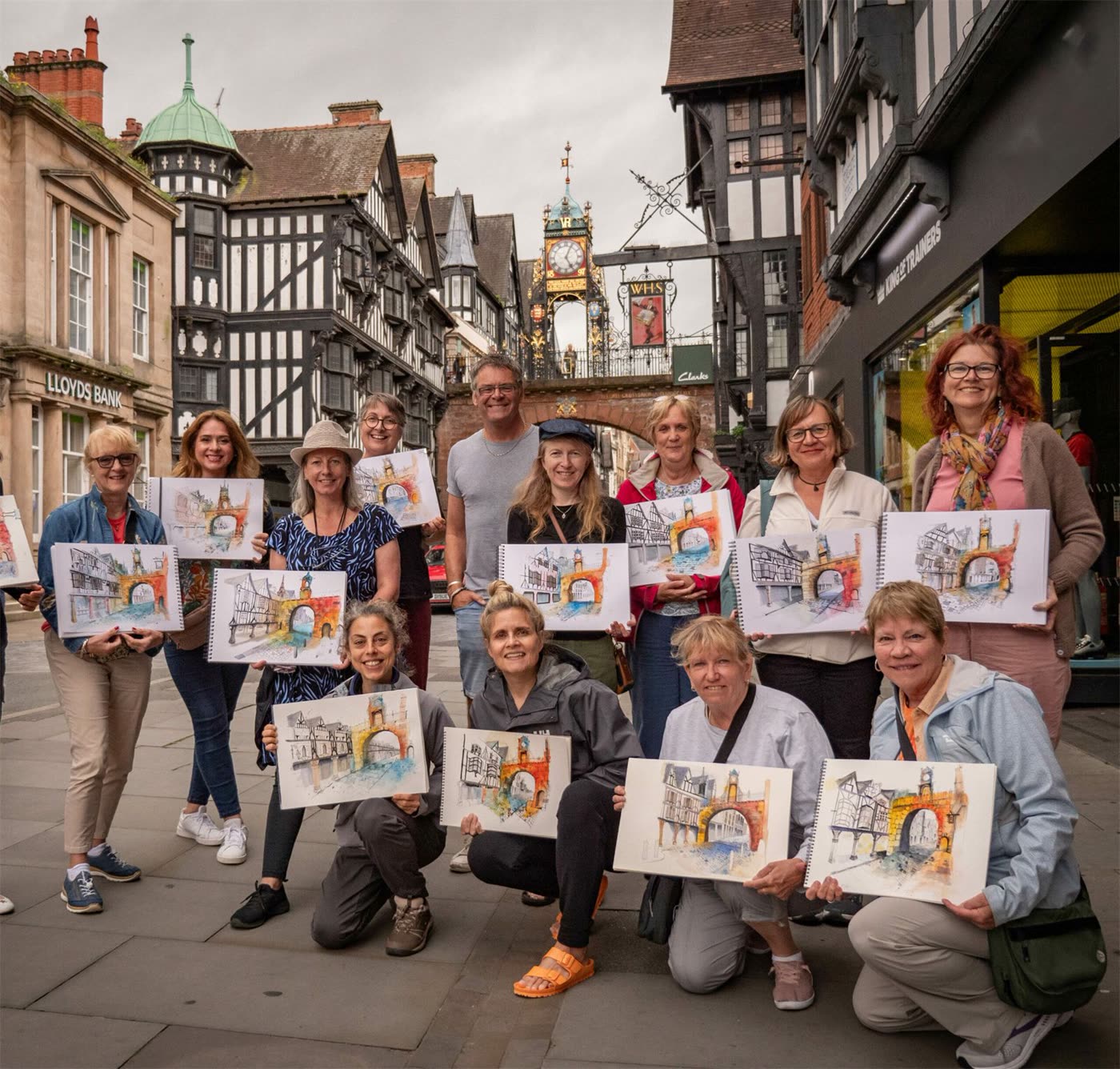
Ian Fennelly is the artist behind every Urban Sketch Course and the voice in every lesson.
He sketches real places on location and talks you through each decision as he makes it, so you learn how he thinks as well as what he draws.
And now, for the first time, you can experience Ian's teachings with this free urban sketching course.
Where it can lead: student success stories
Asmita joined as a beginner and, in under a year, grew so much that people started buying her work and commissioning sketches of their homes!
View Details
Valério had just four sketches finished when he booked his first exhibition, so he drew one a week for four months and opened it in May 2024.
View Details
Pam swapped oils for splashy watercolour, worked through six courses and finally found a way of sketching trees she loves.
View Details
David began urban sketching while going through cancer treatment, and found in Ian's courses a much-needed distraction and a growing confidence.
View Details
Paul had never drawn before he retired and nearly gave up after a few months. Now he sketches for the whole family.
View Details
Karen put away the ruler, the pencil and the eraser, and found a looser, livelier way to paint the scenes she loves.
View Details
From rigid and formulaic to loose and intuitive: Stephanie set out to learn Ian's way with colour, and her sketches came alive.
View Details
Stuart fell for the looseness and happy vibe of Ian's sketches, and took his first steps in urban sketching on the streets of New York.
View Details
Joanie went looking for a way back into watercolour during the pandemic and found a freer, stress-free way to paint.
View Details
Gillian had never settled on an art form. Then she retired, picked up a sketchbook and took art seriously for the first time in her life.
View Details
Marianne's retirement plan was to combine travel with art. One YouTube clip of Ian and she was hooked, and she has taken course after course since.
View Details
 John Hogan
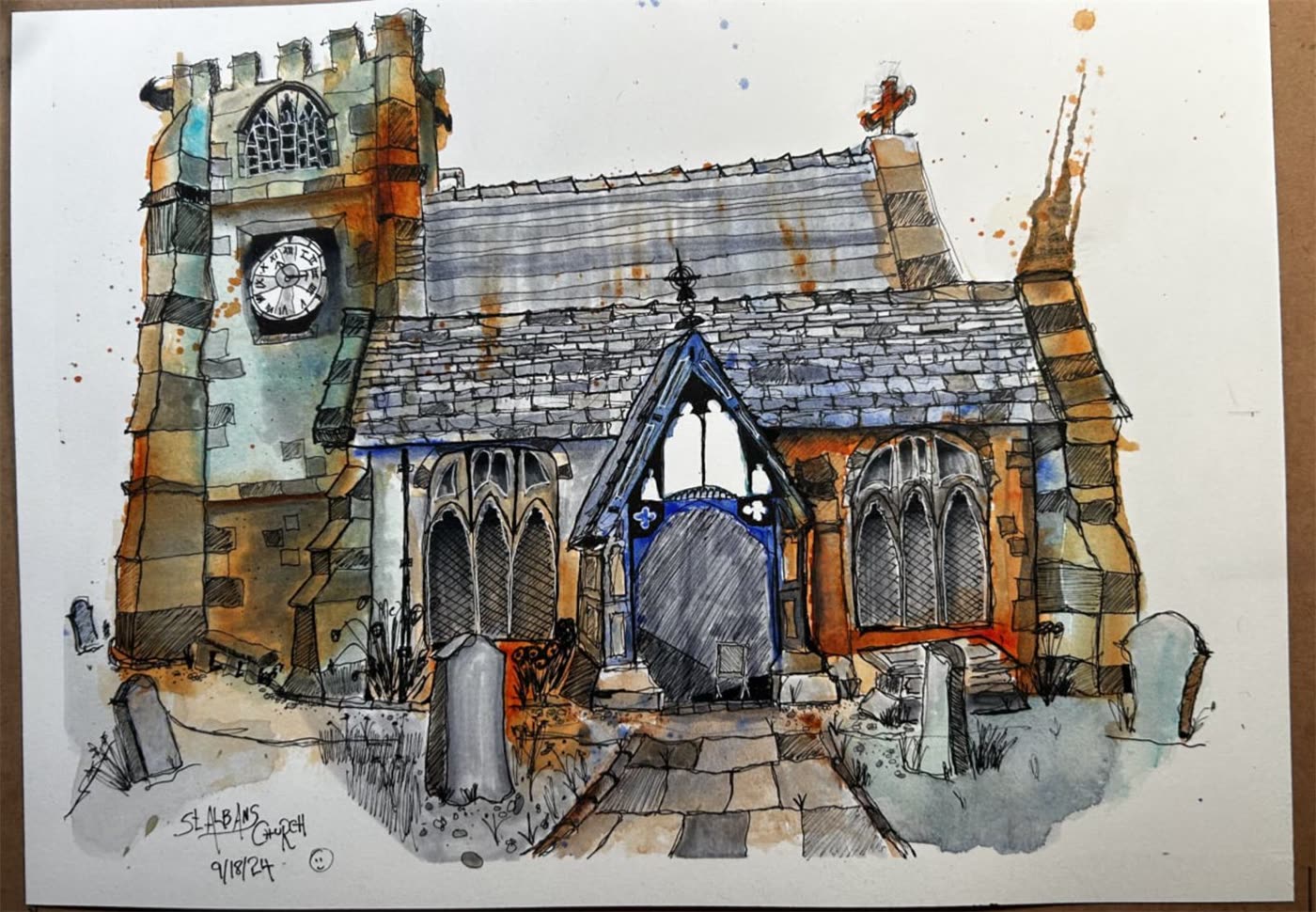
A woodcarver and potter who came to sketching to fix the perspective in his carvings, John signed up for one course and has been hooked ever since.
View Details
Sketches by students of this course
Start sketching today
- Lifetime access: watch, pause and rewatch as often as you like
- Resources, reference photos and colour notes to keep
- No card, no catch: it's free
Join 100K+ people learning with us.
Frequently asked questions
#1 Introduction to Urban Sketching
You'll discover...
- The rapidly growing world of Urban Sketching
- Revealing Ian Fennelly's unique sketching style
- The specific materials and pens to use
- Unveiling Ian Fennelly's step-by-step sketching process
#2 Mastering the Key Elements of Urban Sketching
You'll discover...
- Colour theory basics and the colour wheel
- How to embrace your unique line
- Quick and easy line exercises that get you started
- Grasping perspective, quickly
- Simply ways to be inventive with your sketches
- How to compose your sketch
#3 Start Sketching
You'll discover...
- Ian's top tips for getting started quickly
- How to embrace mistakes like a pro
- How to build your confidence quickly
- Practical Sketching tips you can apply today
#4 Bonus Sketching & Wellbeing Webinar
Join Ian Fennelly and our Urban Sketch Plus members for an inspiring recorded webinar on sketching and wellbeing.
In this session, we explored how urban sketching can benefit mental health, encourage mindfulness, and foster a sense of connection—not just with our art, but with the world around us. Whether you’re looking to unwind, connect with others, or simply be more present, this webinar highlights the power of sketching as a tool for wellbeing.
Why is this urban sketching course free?
This urban sketching course is free because we understand that not everybody is in a position to invest in our more in-depth training courses.
This free course is not designed to replace our range of extensive sketching courses, but it will give you plenty of valuable guidance and real-world insights into urban sketching.
This is ideal if you are new to urban sketching and want to find out a little more before investing any time and money into learning more.
However, please don't discount the value of this course just because it is free! This course has been professionally filmed and developed by an expert team and is delivered from our cutting-edge training platform. We're positive you'll be delighted with it!
What is the difference between this free urban sketching course and the paid courses you offer?
There are some notable differences between this free urban sketching course and our paid-for courses:
1. This is an introduction course to Urban Sketching. In our paid urban sketching courses, Ian goes into considerable depth when it comes to pen work; colour; tone; how to choose the right colours, how to mix and apply water ratios and much more.
2. In our paid courses, typically more stages and more detail is involved and Ian works at a slightly slower pace.
3. This is a much shorter course than our paid-for courses, which typically include several workshops with many hours of training.
Even so, this free urban sketching course is packed with learnings, tips and techniques that will improve your skills and confidence. It's a rare chance to work alongside Ian Fennelly, who is regarded as one of the world's top urban sketchers and teachers.
Can I follow along with Ian while taking this course?
Yes. Although there's no image to sketch in this course, Ian has broken down all of the elements that are involved within his usual scenes.
In this introduction training, he takes you through each step in the process while explaining everything he is doing. Ian is an experienced and engaging teacher, so this is learning that you will thoroughly enjoy.
You can also slow down, pause, or speed up the tutorials to suit your own style of learning.
How long is this free urban sketching course?
This is a quick sketching course that you can complete within an hour. The video learning controls allow you to speed up or slow down each tutorial so that you can absorb the content at a pace that suits you.
What is included in this free urban sketching course?
When you sign up you'll get:
- A free urban sketching course.
- An introduction to line work.
- Colour theory basics and the colour wheel.
- How to be inventive with your sketches when using tone and brush pens.
- An introduction to detail and finding your style.
- How to understand the basics of perspective.
- The basics of composing your sketch.
- Lifetime access to the course and learning portal.
What else will I learn from this free course?
As well as the technical skills you'll gain (as described on this page); you'll also learn how to be inventive with your sketches while bringing elements of fun into them. You'll learn how to sketch more freely and how to make your pictures more visually interesting.
You'll also get a real-life taster of what it's like to sketch on-location and some of the challenges you may come up against. All of this while learning from Ian Fennelly, a master in the art of urban sketching.